
Collaborative Project
TOP-AG - Application and Optimization of Asphalt Granulate in Surface Courses
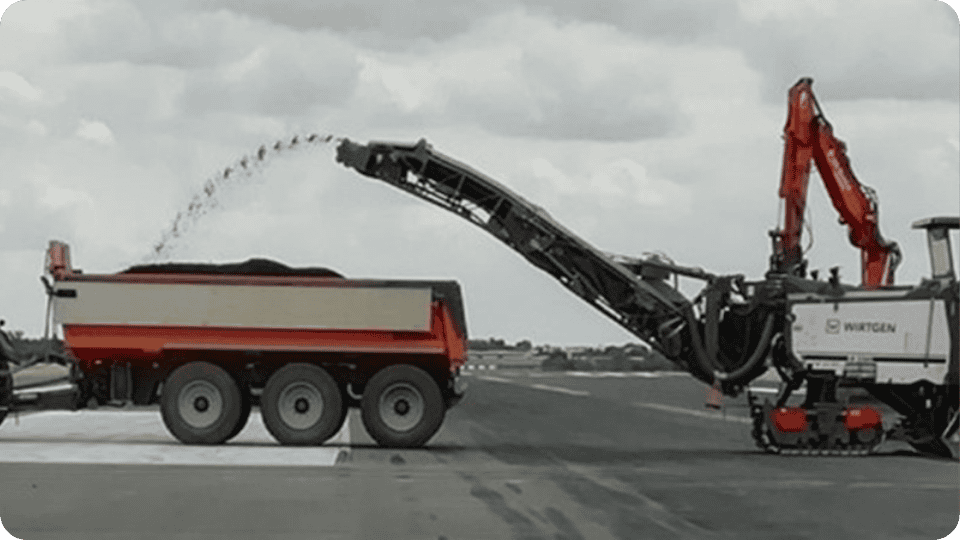
Research into the use of 30% asphalt granulate in the surface layers of bike paths and roads (construction classes B4–B10), in collaboration with SuPAR, the Ministry of Education, Culture, and Science (OCW), and the road construction sector.
The Flemish road construction sector is under increasing pressure to design, build, and maintain infrastructure in a more sustainable manner. In Belgium, approximately 5 million metric tons of asphalt are produced annually, while at the same time, approximately 2.5 million metric tons of asphalt pavement are milled off. Only about half of this asphalt granulate (AG) is reused in high-quality asphalt mixtures due to imposed restrictions, leading to downcycling, loss of valuable bitumen, and continued dependence on primary raw materials. According to the current standard specifications (SB250 v5), a maximum of 20% AG is permitted, and only for low construction classes (B9–B10), while recent research shows that reuse in surface courses up to 30% is technically feasible.
This project aims to provide technical and environmental-economic justification for, and demonstrate, the use of 30% asphalt granulate in the surface layers of bike paths and roads in construction classes B4 through B10, without increasing the risk of failure or compromising quality. By building on recent knowledge and broad industry support, the project aims to strengthen confidence among road authorities and contribute to a more circular, sustainable, and economically sound use of asphalt granulate in Flanders. The project is a collaboration between SuPAR, OCW, and the road construction sector.